
CCM Particle Size: Powder, Granule or Ball?
CCM Particle Size: Powder, Granule or Ball?
Caustic calcined magnesite (CCM), also called light burned magnesia, is chemically simple: magnesium oxide produced by calcining magnesite at roughly 700 to 1000 C. What is not simple is the physical form it is shipped in. The same MgO grade can be delivered as a fine powder, as a screened granule, or as a pressed ball, and each form behaves completely differently in a hopper, a slurry tank or a furnace. Buyers who specify only MgO percentage often discover too late that form, not chemistry, is what causes dust complaints, bridging, uneven dosing or slow dissolution.
Why Particle Size Changes Everything
Particle size controls specific surface area, and surface area controls reaction rate. A 200 mesh CCM powder has orders of magnitude more reactive surface per kilogram than a 3 mm granule. That is why wastewater neutralization plants want powder and why steel slag conditioners often want granules. Particle size also governs flow behaviour: fine powder fluidizes and dusts, granules flow freely and segregate by size, and balls roll and pack with predictable voidage. Finally, size drives logistics: powder occupies more volume per tonne, generates dust during loading, and is more sensitive to moisture pickup in transit.
Powder: Maximum Surface Area and Reactivity
Powdered CCM is the standard choice wherever the material must dissolve or react quickly. Typical grades run 85 to 98 percent MgO with sizing specified as 100 mesh, 200 mesh or 325 mesh. In wastewater neutralization, fine powder slurries easily, holds pH in a narrow band and precipitates dissolved metals as hydroxides. In fertilizer and feed blending, powder is essential for homogeneity: a coarse fraction will segregate out of a compound blend and produce an uneven field response. The trade-offs are real, though. Fine powder dusts during bag emptying, requires dust collection and respirators, and must be kept dry because its high surface area also absorbs atmospheric moisture and CO2 during storage, slowly reducing available reactivity.
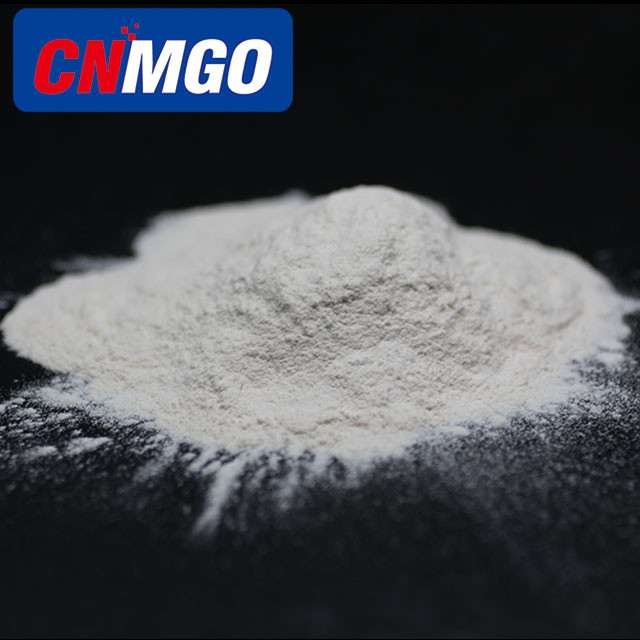
High purity CCM powder, MgO 94 to 98 percent, milled for reactive industrial use.
Granular: Controlled Flow and Lower Dust
Granular CCM occupies the middle ground. Screened fractions such as 0 to 1 mm, 0.1 to 1.8 mm and 0.3 to 2 mm flow predictably through weigh feeders and screw conveyors, generate far less dust than powder, and dissolve at a controlled rate rather than instantly. This makes granules the practical choice for slag conditioning and flux addition, where a slow, sustained reaction is desirable, and for soil application where a gradual pH correction is preferred over a fast spike. Granules also resist caking better than fine powder because there is less contact surface for moisture bridges to form. Buyers should still specify the full size distribution, not just the top cut, because fines carried in a granular product reintroduce the dust and segregation problems the granule was meant to solve.
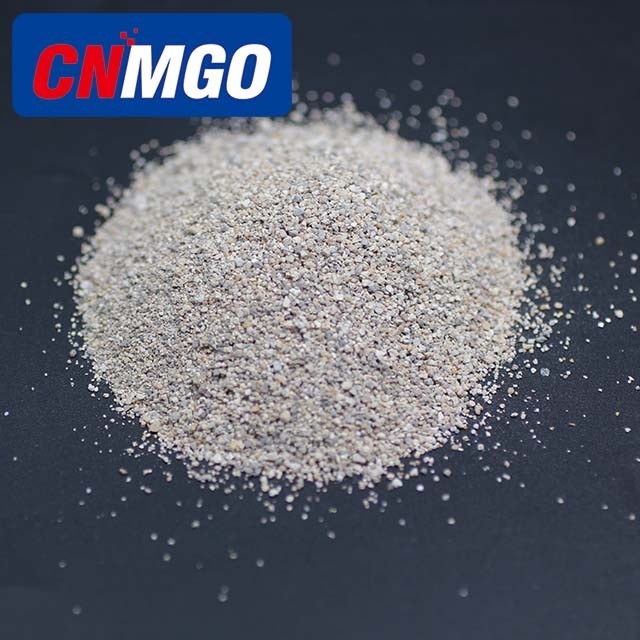
Screened CCM granular, 0 to 1 mm, suited to controlled feeding and slag conditioning.
Ball and Briquette Forms: Handling and Furnace Feed
CCM balls, typically pressed to around 2 to 5 mm or larger, are the least dusty and most free-flowing form. They are chosen where material is charged mechanically into a furnace, where airborne loss would be unacceptable, or where a dense, low-voidage charge is needed for consistent melting behaviour. Because a ball has low external surface relative to its mass, it reacts more slowly than powder of the same chemistry, which is exactly what some metallurgical processes require. Balls also survive long-distance handling better: they do not compact into a solid mass in a jumbo bag the way a damp fine powder can.
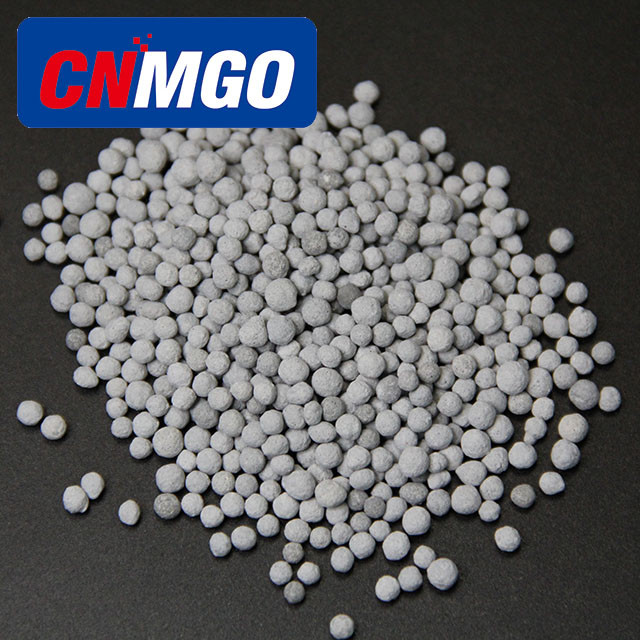
Pressed CCM ball, 2 to 5 mm, designed for low-dust furnace charging.
Matching Form to Process: A Buyer Matrix
A practical way to choose is to start from the process requirement rather than the product list. The table below summarises the usual mapping.
| Process | Preferred form | Reason |
|---|---|---|
| Wastewater neutralization | Powder, 200 mesh | Fast dissolution, tight pH control |
| Fertilizer and feed blending | Powder, 100 to 200 mesh | Homogeneous mix, no segregation |
| Slag conditioning | Granular, 0.3 to 2 mm | Sustained reaction, low airborne loss |
| Furnace charge | Ball, 2 to 5 mm | Low dust, predictable packing density |
| Soil liming | Granular or powder | Depends on required speed of correction |
Note that chemistry does not replace this decision. A 95 percent MgO powder and a 95 percent MgO granule have identical analysis on paper and completely different behaviour on the plant floor.
Packing, Moisture and Storage by Form
Powder should be shipped in moisture-barrier-lined bags and consumed first, because its reactivity declines fastest with humidity exposure. Granular and ball forms tolerate longer storage but should still be kept off concrete floors and under cover. For all forms, buyers should confirm bulk density, angle of repose expectations, and whether the supplier can supply jumbo bags with discharge spouts for silo or big-bag discharger feeding. These practical details determine whether your receiving equipment actually handles the material.
HOLY Perspective
HOLY (CNMGO Group Limited) produces caustic calcined magnesite at Dashiqiao in Liaoning and ships powder, granular and ball forms from Dalian to more than 50 countries. Our recommendation is to specify chemistry and physical form together on every enquiry: MgO content, impurity ceilings, size distribution, bulk density and packing. That single habit prevents most of the receiving problems our technical team is asked to troubleshoot.