
Reading a Magnesia Certificate of Analysis: Key Fields
Reading a Magnesia Certificate of Analysis: Key Fields
A Certificate of Analysis, or COA, is the most useful document that ships with a consignment of caustic calcined magnesite, dead burned magnesia or fused magnesia, and it is the one most often reduced to a single number. Many buyers check the MgO percentage, file the sheet and move on, then meet a caking, reactivity or sizing problem weeks later on the plant floor. A COA is not a brochure. It is a lot-specific record of measured values, and reading it field by field tells you whether the material will run in your process, whether the producer controls its kiln, and whether you have a defensible claim if it does not. This guide covers the fields that matter for magnesia grades, what each value means physically, how the test method changes the number, and how to flag an out-of-specification result before the container is discharged.
The COA as a Contract and Test-Method Document
Read the header before the numbers. A usable COA names the producer, the product and grade, the lot or batch number, the production or sampling date, the net quantity covered, and the laboratory that ran the analysis. Then locate the method references. A serious producer states the analytical standard behind each oxide: X-ray fluorescence for MgO, CaO, SiO2, Fe2O3 and Al2O3, gravimetric loss on ignition by firing to a stated temperature, and sieve analysis against an ISO 3310 or equivalent screen series. ISO 9001 certification describes the quality management system, not the accuracy of one result, so ask which methods back each figure and whether the lab is accredited to ISO 17025. Check the reporting basis too. MgO on an as-received basis and MgO on a dried or ignited basis can differ by a full percentage point when free moisture or LOI is high, and two suppliers quoting different bases are not comparable. If basis, method and lot number are missing, the sheet cannot support a specification or a claim.
MgO Content: The Headline Number
MgO content is the headline because it drives both price and performance, but it is only a starting point. For caustic calcined magnesite, industrial grades commonly run 85 to 92 percent MgO and high purity grades 94 to 98 percent. Dead burned magnesia for refractories is usually specified at 90 to 97 percent, and fused magnesia at 95 to 99 percent. Read the number together with its declared tolerance, for example 92 percent minimum or 90 to 92 percent, and note whether it is a minimum, a range or a typical value. A typical value is not a guarantee. Also check what makes up the balance: the difference between 98 percent MgO and 100 percent is the sum of the impurity oxides, LOI and moisture, so a high MgO figure with a high LOI is not necessarily a purer or better-burned product. For reactive CCM, a very high MgO combined with a hard burn can be less useful than a slightly lower MgO with high reactivity, which is why the activity test in a later section belongs in the same specification.
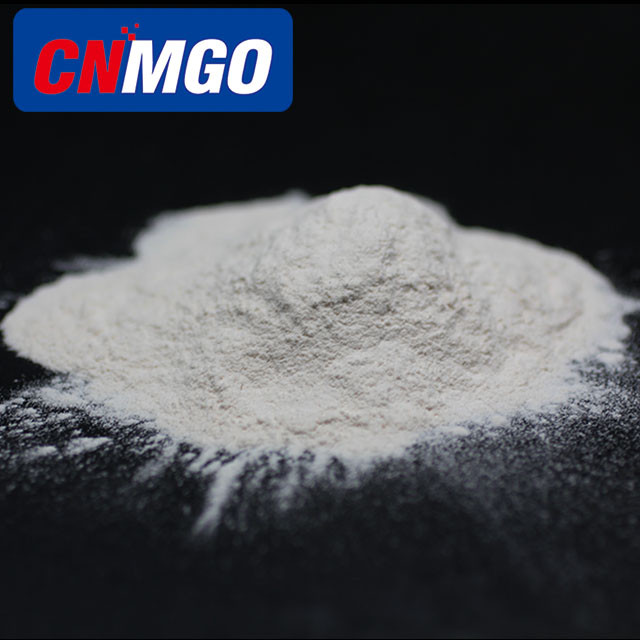
High purity CCM powder, MgO 94 to 98 percent, a grade where the COA MgO figure drives the price.
Impurity Oxides: CaO, SiO2, Fe2O3 and Al2O3
The four impurity oxides each tell you something different. SiO2 and CaO are the pair that matter most in refractory DBM and FM because their ratio determines which silicate phases form at periclase grain boundaries: a CaO to SiO2 ratio near or above 2 favours high-melting dicalcium silicate, while a low ratio promotes lower-melting phases that soften under load. Fe2O3 and Al2O3 contribute to colour, to low-melting bond phases and, in electrical or heating-element grades, to unwanted conductivity. B2O3, sometimes listed separately, is worth watching because even a few tenths of a percent can sharply depress the melting point of the bond phase. For CCM used in board, feed or chemical processes, the practical concern is different: iron and alumina are inert diluents, while active calcium and silica can consume acid or alter set chemistry. Ask for maximum limits, not typical values, and confirm the sum of MgO plus all reported oxides plus LOI reconciles to roughly 100 percent. A sheet that adds up to 97 or 103 percent is a reason to query the lab before you rely on any single line.
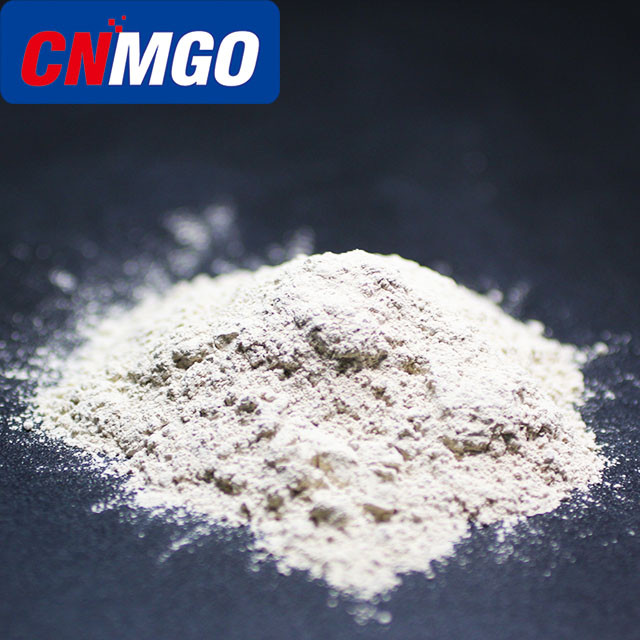
DBM powder at 325 mesh, where CaO to SiO2 ratio and impurity ceilings matter more than headline purity.
LOI, Moisture and Bulk Density
Loss on ignition measures the mass driven off when a sample is fired to a specified temperature, usually covering combined water, carbon dioxide from any carbonate and residual unburned magnesite. For dead burned and fused magnesia, LOI should be low, commonly below 0.5 percent, because a high value signals incomplete burning and residual porosity. For caustic calcined magnesite, a somewhat higher LOI is normal and reflects the deliberately reactive, partly hydroxylated surface. Free moisture, reported separately as H2O at 105 C, is a storage and handling indicator: hygroscopic CCM picks up water in transit, and rising moisture predicts caking and declining reactivity. Bulk density, in grams per cubic centimetre, is the field most often omitted and most worth requesting for refractory grades. Well-sintered DBM grain sits around 3.20 to 3.45 g/cm3 because pure periclase is near 3.58; a low bulk density means open porosity, faster slag penetration and shorter lining life. Confirm the method, since loose bulk density and tapped or grain density are not the same number.
Particle Size Distribution and Reactivity
Particle size distribution is reported as a sieve analysis, for example a percentage retained on each of a series of meshes, or as a D50 and top cut. For powder grades such as 200 mesh or 325 mesh DBM and FM, the COA should state the percentage passing the stated screen, not just the nominal size. For granular CCM and sized DBM fractions, read the full distribution: the fines carried inside a 0 to 3 mm granule reintroduce the dust and segregation the granule was meant to avoid. Reactivity is the companion field for caustic calcined magnesite and is commonly measured with a citric acid neutralisation test, reported as the time in seconds for a defined acid volume to be neutralised, or as an iodine activity number. A fast citric acid time means a highly reactive, lightly burned product that sets magnesium cement quickly; a slow time indicates a harder burn. Because reactivity changes with storage and humidity, insist that the COA reports the test date and method, and set an acceptable activity band in the contract rather than a single target.
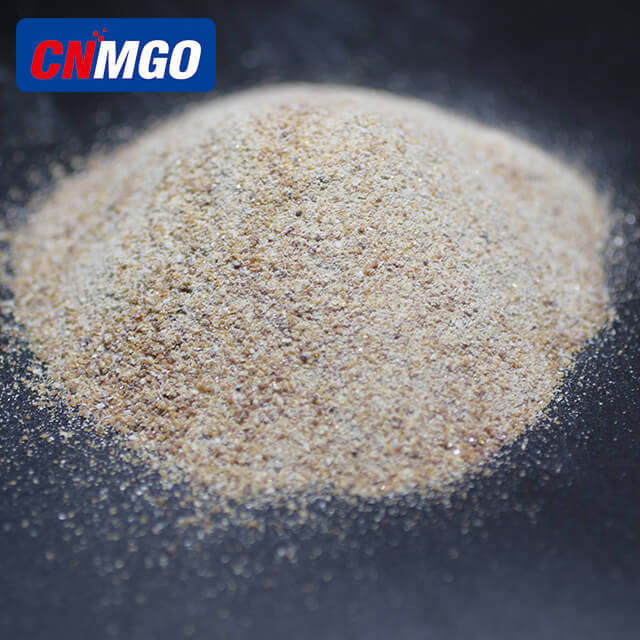
Fused magnesia powder, MgO 95 to 99 percent, specified with sieve fractions and low B2O3.
Sampling, Lot Traceability and Flagging Out-of-Spec Values
A COA is only as good as the sample it describes. Representative sampling means taking increments from multiple bags or points across the lot, compositing them, and splitting down to a lab portion, not scooping once from the top of one bag. The COA should carry the same lot number as the bags, pallets and packing list so a result can be traced back to a kiln run and forward to a customer batch. Keep sealed reference samples from each lot at both ends; they are what make an independent retest possible if a dispute arises months later.
- Compare every line against the agreed specification, including tolerances, not just the MgO figure.
- Check that basis, methods, lot number and date are present and consistent across documents.
- Reconcile the oxide sum plus LOI to about 100 percent and query any shortfall.
- Look for drift across three consecutive lots, which often reveals a kiln change before a hard failure.
- Quarantine the lot and request an independent lab retest on the retained reference sample before use.
Flag a value as out-of-spec when it breaches a contractual limit, when it sits inside the limit but outside the historical lot average by more than the agreed control band, or when required fields are simply absent. Document the exception in writing with the COA reference, notify the supplier within the claim window set in the contract, and hold the reference sample. Most trade disputes are won or lost on this paper trail, not on a single re-test.

HOLY Perspective
HOLY (CNMGO Group Limited) manufactures CCM, DBM, fused magnesia and magnesium sulphate at Dashiqiao in Liaoning and exports from Dalian to more than 50 countries under an ISO-certified quality system. We issue a lot-specific Certificate of Analysis with MgO, the full impurity panel, LOI, moisture, bulk density, sieve analysis and reactivity where relevant, each tied to a stated test method. Share your specification and we will align the COA fields to your receiving checks before the first shipment.